Peyton Watson's Tough Free Agency Comes to an End
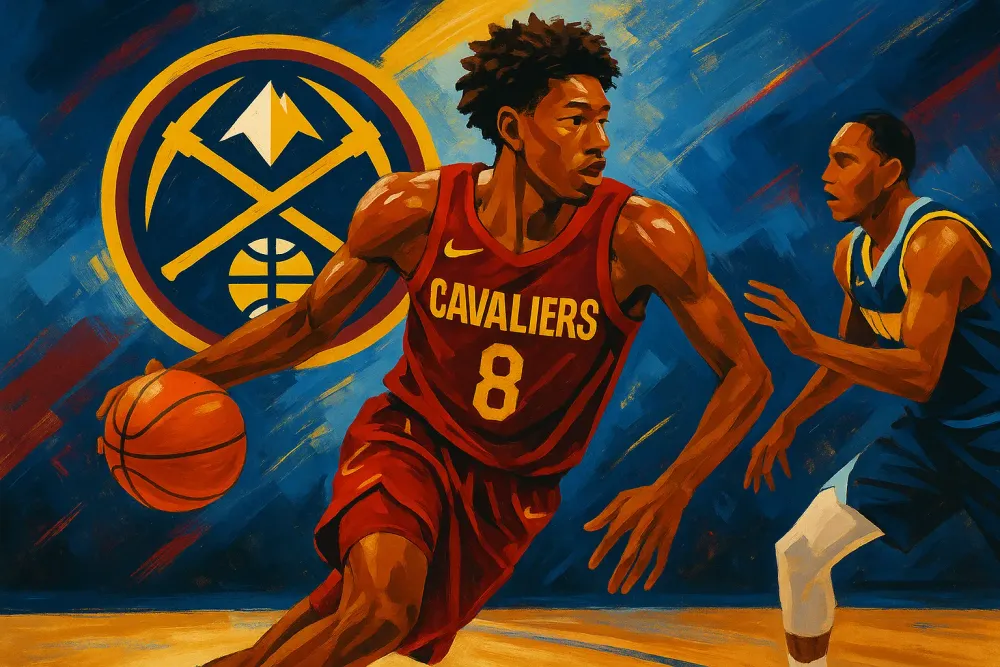
Peyton Watson's prolonged standoff regarding his restricted free agency has finally concluded. After extensive negotiations, the Denver Nuggets have executed a sign-and-trade deal sending the young player to the Cleveland Cavaliers. The arrangement involves multiple moving parts, including the Los Angeles Clippers and the Sacramento Kings, reflecting the complexities of NBA transactions.
Details of the Trade
According to ESPN's Shams Charania, the Nuggets are trading Watson to the Cavaliers in exchange for Cleveland's 2031 first-round pick and a 2032 second-rounder from the Sacramento Kings. Additionally, the Cavs are sending Max Strus to the Clippers, allowing them to allocate sufficient funds to sign Watson to a lucrative four-year contract valued at $88 million.
This trade brings to an end the drawn-out saga of Watson's free agency, which raised eyebrows as teams across the league eyed him as a valuable asset. The Nuggets' decision to engage in a sign-and-trade comes in light of Watson's impressive performances last season, which positioned him as a sought-after player.
Watson's Rise and Performance
During the previous season, Watson demonstrated significant growth on the court. Despite a hamstring injury that cut his campaign short, he achieved career-best averages of 14.6 points and 4.9 rebounds across 54 games. Notably, his shooting accuracy also improved substantially; his true shooting percentage rose to an impressive 59.4%, and his three-point shooting climbed from 35.3% to 41.1%.
His standout game came in a thrilling matchup against the Washington Wizards, where he scored 35 points, grabbed eight rebounds, and contributed multiple assists and blocks. Such a performance not only highlighted his potential but also undoubtedly increased his market value.
Market Influence and Team Interest
With Watson showcasing his evolving skill set, interest in his services surged during the offseason. Teams like the Los Angeles Lakers, Chicago Bulls, and Brooklyn Nets were reported as potential landing spots, fueling speculation regarding his future. As the free agency market opened, it became evident that a player of Watson's caliber and age would be in high demand.
The 2026 free-agent class was relatively sparse on star talent, making Watson a prime target for teams seeking to bolster their rosters. With limited top-tier options available, the demand for a player of Watson's young age and demonstrated ability soared, further driving up his anticipated contract value.
The Nuggets Take a Calculated Risk
The Nuggets' determined stance throughout the negotiations suggested a strategic evaluation of Watson's place within the franchise. They appeared to be playing hardball, possibly questioning whether Watson's significant improvements in the previous season would be sustainable. The implications of exceeding salary cap limits when re-signing him may have weighed heavily on their decision as they navigated this trade.
While the Nuggets are losing a promising talent, their decision to trade Watson signifies a calculated risk. It remains to be seen how the franchise plans to offset Watson's absence, as filling the gap left by his talents on the floor is no straightforward task.
The Cavs Welcome Watson to Strengthen Their Roster
On the flip side, the Cavaliers are seizing an opportunity to solidify their roster with the addition of Watson. Following LeBron James' decision to join the Philadelphia 76ers, the Cavs found themselves needing a significant upgrade to remain competitive in the Eastern Conference. Acquiring Watson is a crucial step toward achieving that goal.
Watson, who excels at the small forward position, presents an upgrade over Max Strus, and Coach Kenny Atkinson will benefit from added depth in the frontcourt. Watson's ability to also play as a small-ball four enables greater flexibility in defensive strategies and lineup choices, especially regarding the development and rest of rising star Evan Mobley.
Implications for the Eastern Conference
While Watson's addition does not position Cleveland as automatic favorites in the East, it does reveal their ambition to enhance a roster that was deemed inadequate last season. With Watson on board, the Cavaliers are signaling their intent to improve and compete seriously in the upcoming season. The move not only strengthens their on-court presence but also reflects a larger strategy going into the new season.
In summary, the multi-team trade that facilitated Peyton Watson's move to the Cleveland Cavaliers serves as a testament to the evolving dynamics of player movement within the NBA. The overarching implications of this deal extend beyond just the immediate teams involved and hint at the larger narrative of free agency, market value, and competitive strategy in professional basketball.